
The Three Forms of Unity
Explore the history and theology of the Three Forms of Unity. This course examines their scriptural foundations and influence in Africa, equipping believers to apply these timeless truths to modern ecclesiastical and moral challenges.
THE THREE FORMS OF UNITY
The Reformation produced three particular Confessions. These Confessions give the Reformed churches their own identity. The Dutch Creed (1561), the Heidelberg Catechism (1563), and the Dordrecht Doctrine (1618/19) are examined in their historical background, nature, structure, content, theological foundation, and ecclesiastical significance.
The course concludes with an overview of the reception and influence of these confessions on the African continent, with specific reference to translations.
Who will benefit from this?
This study seeks to reaffirm the Reformed beliefs of each member from Scripture. Its practical value for the daily life of every believer is pointed out. It also shows how the confessions in a Scriptural way determine the character of the reformed churches.
You will learn:
- Why these Confessions came about and their significance for today
- How the content is composed and the truths contained in it
- How these truths should be applied to ecclesiastical, ethical, and moral issues in our modern times.
Presented by:
Rev Dirk Meijer
second semester roster

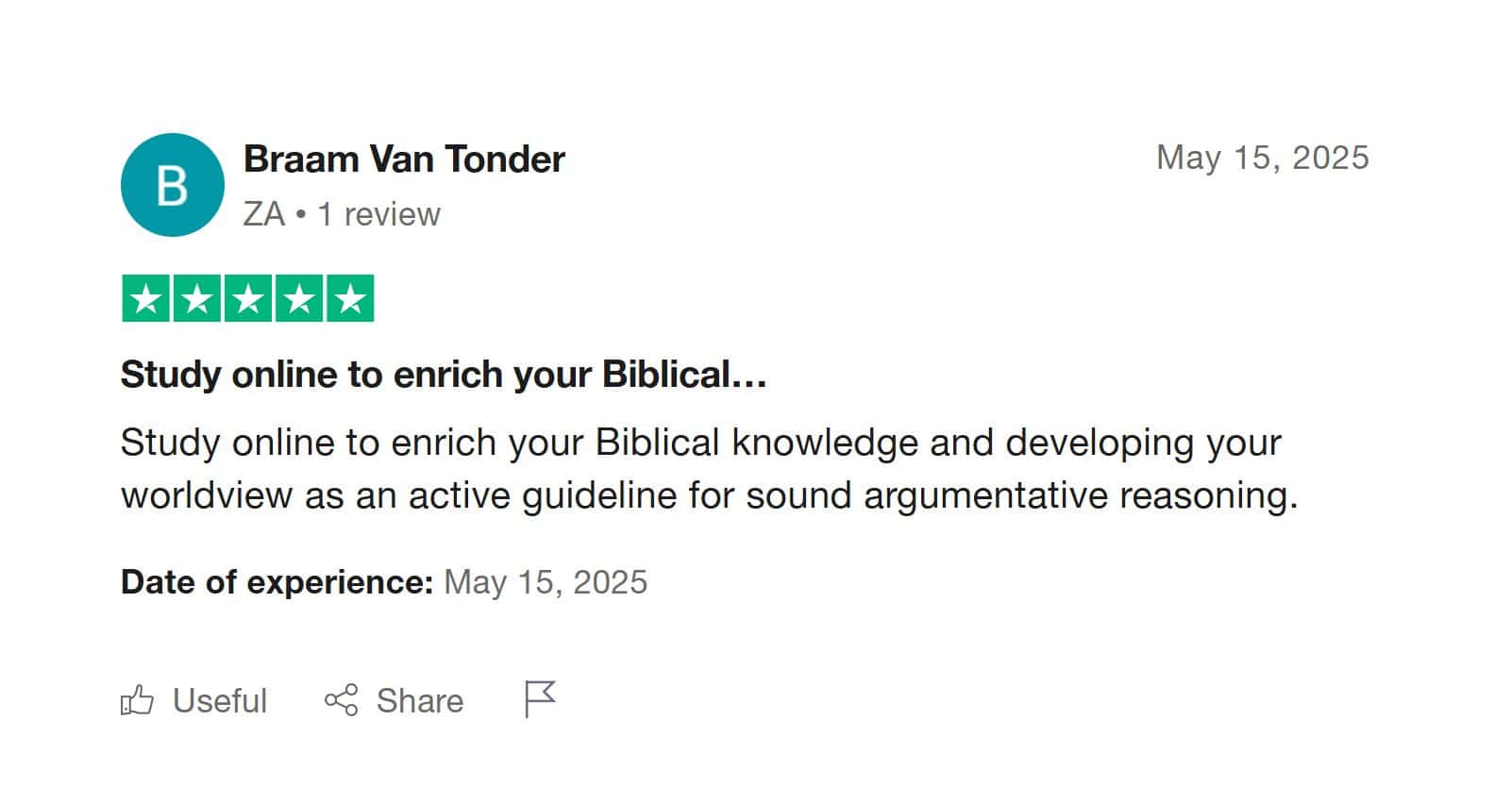
In Their Own Words


Related Products

Canons of the Bible - Textual Criticism
Discover how the Bible you hold was faithfully preserved through centuries—and learn to defend Scripture's authority with confidence through textual criticism and translation principles.
![Catechetics [Next intake 2027]](http://rgta.org.za/wp-content/uploads/2025/12/catechetics.jpg)
Catechetics [Next intake 2027]
Fulfil Christ's Great Commission by mastering effective teaching principles. Equip yourself to create healthy learning environments and guide children, young people, and adults toward spiritual maturity, helping others understand, apply, and defend their faith.
![Christ and Worldviews [Next intake 2027]](http://rgta.org.za/wp-content/uploads/2025/12/christ-and-wordviews.jpg)
Christ and Worldviews [Next intake 2027]
Equip yourself to proclaim the Gospel effectively by understanding how people think. Examine influential worldviews—including Judaism, Islam, African worldviews, existentialism, and postmodernism—then develop a grounded Christian worldview you can live out and defend in society.
![Church Goverment Systems [Next intake 2027]](http://rgta.org.za/wp-content/uploads/2025/12/church-goverment-systems.jpg)
Church Goverment Systems [Next intake 2027]
Discover how Christ governs His church through biblical principles expressed in Reformed church government. Compare various systems while exploring the roles of ministers, elders, deacons, and every church member in Christ's unique rule.

Evangelistics
Equip yourself to fulfil Christ's command: Make disciples. Learn to engage contemporary people with the Gospel, understand their hopes and fears, and build congregations that effectively welcome new believers.
![Exegesis [Next intake 2027]](http://rgta.org.za/wp-content/uploads/2025/12/exegesis.jpg)
Exegesis [Next intake 2027]
Master the art of biblical interpretation through careful engagement with Scripture's language, literary forms, and historical context. Learn to discern God's revelation responsibly, ensuring you hear His voice clearly rather than imposing personal preconceptions.